Menopause and Joint Pain: Is There a Connection?

Women going through menopause typically think of hot flashes and mood changes as the main symptoms. They do not expect menopause to bring pain in the knees, fingers, hips, and muscles.
If your joints are feeling older than the rest of your body, you are not alone.
Joint pain is among the most common symptoms of menopause and perimenopause, even if it is most often overlooked. The changes in the body and decreasing levels of estrogen bring about swelling and inflammation in the joints and muscles, which can make simple day-to-day activities very difficult and can decrease your quality of life.
The good news is that relief is available, and the first thing you must do is understand the symptoms you are dealing with.
Can Menopause Cause Joint Pain?
Yes. Many women experience new or worsening joint discomfort during perimenopause and menopause.
Researchers believe declining estrogen plays an important role because estrogen helps support healthy joints by:
Reducing inflammation
Supporting collagen production
Maintaining joint lubrication
Protecting cartilage
Supporting healthy muscle function
As estrogen levels decrease, joints may become stiffer and more sensitive, especially in the morning or after periods of inactivity.
Some women describe it as feeling like they "aged overnight."
What Does Menopause Joint Pain Feel Like?
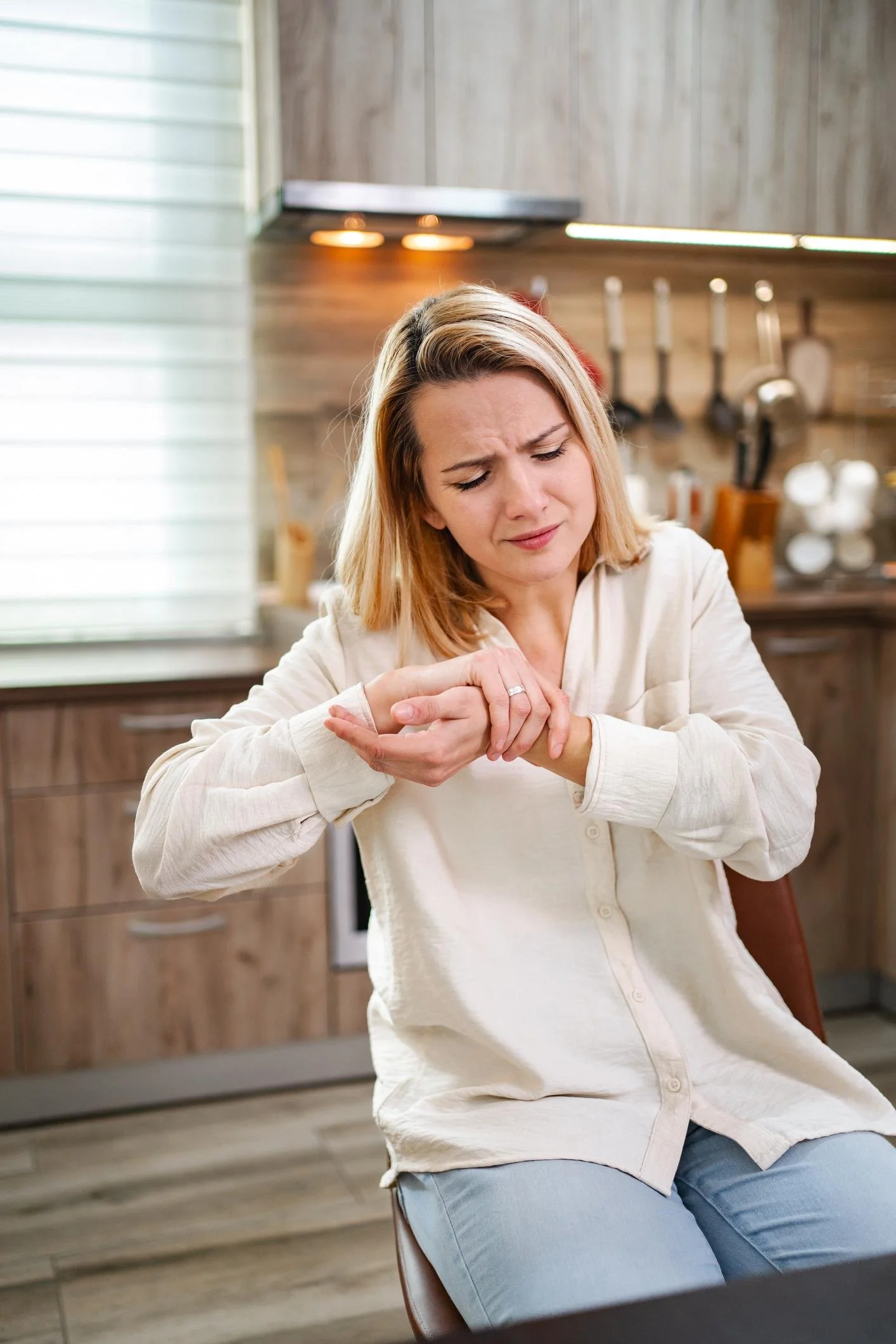
Joint pain affects every woman differently, but common symptoms include:
Aching knees
Sore hips
Stiff fingers
Painful shoulders
Neck stiffness
Lower back discomfort
Muscle aches
General body soreness
And many women notice symptoms are worse:
First thing in the morning
After sitting for long periods
Following poor sleep
During periods of increased stress
The discomfort may come and go or gradually become more noticeable throughout perimenopause.
Why Does Menopause Affect the Joints?
While estrogen changes are one piece of the puzzle, several factors often work together. These are the top 5:
Hormonal Changes
Estrogen has anti-inflammatory effects throughout the body.
When estrogen declines, inflammation may increase, contributing to joint pain and stiffness.Muscle Loss
Women naturally lose muscle mass as they age.
Because muscles help stabilize and protect joints, decreased muscle strength can place additional stress on knees, hips, and other weight-bearing joints.Changes in Collagen
Collagen provides structure and support for joints, tendons, and ligaments.
Lower estrogen levels may reduce collagen production, affecting flexibility and joint comfort.Sleep Disruption
Many women experience poor sleep due to hot flashes or night sweats.
Sleep deprivation has been linked to increased pain sensitivity and slower recovery from inflammation.Weight Changes
Even modest weight gain can place additional pressure on the knees, hips, and lower back.
Maintaining a healthy weight can help reduce stress on the joints while supporting overall health.
Which Joints Are Most Commonly Affected?
Joint pain can occur anywhere, but women commonly report discomfort in:
Knees
Hands and fingers
Hips
Shoulders
Neck
Feet
Lower back
Some women also notice generalized muscle pain or stiffness throughout the body.
What Can Help Relieve Menopause Joint Pain?
While there isn't a single solution, many women find relief through a combination of lifestyle changes and medical care.
Stay Active
When joints hurt, resting may feel like the best option.
However, regular movement often helps reduce stiffness.
Low-impact activities include:
Walking
Swimming
Cycling
Yoga
Pilates
The goal isn't intense exercise—it's consistent movement.

Prioritize Strength Training
Building muscle helps support and stabilize joints.
Even two or three strength-training sessions each week can improve mobility, balance, and overall function.
Resistance bands, light weights, or bodyweight exercises are excellent places to start.

Eat an Anti-Inflammatory Diet
A nutrient-rich diet may help reduce inflammation.
Focus on foods like:
Colorful vegetables
Fruits
Lean protein
Fatty fish
Olive oil
Nuts
Whole grains
Limiting ultra-processed foods and added sugars may also support joint health.

Support Bone Health
Calcium, vitamin D, and adequate protein all play important roles in maintaining healthy bones and muscles during menopause.
Your physician may recommend supplements based on your individual needs.
Improve Sleep
Quality sleep helps the body recover and regulate inflammation.
If hot flashes or night sweats are interfering with sleep, treating those symptoms may also improve joint discomfort.

Manage Stress
Chronic stress and anxiety during perimenopause and menopause can increase inflammation and muscle tension.
Simple practices such as deep breathing, meditation, gentle stretching, or spending time outdoors may help improve overall well-being.
Can Hormone Therapy Help?
For some women, hormone replacement therapy (HRT) may help improve menopause-related joint pain.
Research suggests estrogen therapy may reduce inflammation and improve joint comfort for women who are appropriate candidates.
However, hormone therapy isn't right for everyone.
The decision should always be based on your personal medical history, symptoms, goals, and risk factors after discussing treatment options with your physician.
When Joint Pain May Be Something Else
Although menopause can contribute to aching joints, not every joint problem is caused by hormones.
Persistent or severe pain may be related to:
Osteoarthritis
Rheumatoid arthritis
Autoimmune disorders
Thyroid disease
Vitamin deficiencies
Tendon injuries
Other musculoskeletal conditions
If your symptoms are worsening, affecting daily life, or accompanied by swelling, redness, fever, or significant weakness, it's important to seek medical evaluation.
When Should You Talk to Your Doctor?
You don't have to simply accept joint pain as part of getting older.
If you're experiencing persistent aches, stiffness, or reduced mobility during perimenopause or menopause, a comprehensive evaluation can help identify the underlying cause and determine the most appropriate treatment plan.
Sometimes hormonal changes are the primary contributor. Other times, additional conditions may be involved.
The right diagnosis is the first step toward feeling better.
The Bottom Line
Joint pain during menopause is common, but that doesn't mean it's something you have to live with.
Hormonal changes, inflammation, muscle loss, sleep disruption, and lifestyle factors can all contribute to aching joints and muscle pain during midlife.
With the right combination of movement, nutrition, sleep, stress management, and personalized medical care, many women experience meaningful improvement in their symptoms.
If joint pain is affecting your quality of life, speaking with a physician experienced in menopause care can help you understand your options and create a treatment plan tailored to your unique needs.

Ready to feel better again?
At JilaMD, we specialize in personalized care for women navigating joint pain during menopause and perimenopause.
Join the consultation waitlist and take the first step toward feeling better.
Frequently Asked Questions
-
Yes. Declining estrogen levels can contribute to inflammation, stiffness, and discomfort in the joints. Many women experience new or worsening joint pain during perimenopause and menopause.
-
The knees, hips, hands, shoulders, neck, and lower back are among the most commonly affected areas, although symptoms vary from person to person.
-
Some women experience improvement with hormone replacement therapy, but it isn't appropriate for everyone. Treatment decisions should always be made in consultation with your physician, taking into account your medical history and symptoms.
-
For some women, symptoms improve as hormone levels stabilize after menopause. Others may continue experiencing joint discomfort due to aging, arthritis, or other underlying conditions.
-
Low-impact activities such as walking, swimming, cycling, yoga, and strength training can all help improve joint mobility, reduce stiffness, and support muscle strength.