
If you’re in your late 30s or 40s and your cycle has started doing its own thing — shorter, longer, heavier, lighter — you might be wondering whether you even need birth control anymore. It’s a fair question. It’s also one that catches a lot of women off guard, because “perimenopause” and “still need contraception” don’t always feel like they belong in the same sentence.
They do. Contraception in perimenopause is still important for most women who don’t want to get pregnant, and the options available to you may look a little different than they did in your 20s. Here’s what’s actually true, what tends to get misunderstood, and how to think through your choices.
Can You Still Get Pregnant in Perimenopause?
Yes. This is the part most people underestimate.
Perimenopause can last anywhere from a few years to a decade before your periods stop for good, and during that entire stretch, your ovaries are still releasing eggs, just less predictably. Irregular cycles don’t mean ovulation has stopped; they often mean it’s become harder to predict.
Research summarized in a clinical review on contraception during perimenopause notes that the annual risk of pregnancy is lower than in younger women, but it isn’t zero: roughly 10% at ages 40 to 44 and 2 to 3% at ages 45 to 49. And when pregnancies do happen at this age, a large share are unplanned, in part because women often assume their fertility has already ended.
That’s the core reason clinicians recommend continuing contraception well into the perimenopausal years, not just a reflex “better safe than sorry,” but a reflection of real, published pregnancy rates in this age group.
So When Can You Actually Stop?
There isn’t one universal date on the calendar. The general guidance that ACOG, the CDC, and The Menopause Society point to is based on your age when your periods stop, not a specific birthday:
If your last period happens before age 50, most guidance suggests continuing contraception for about 24 months afterward.
If your last period happens at age 50 or later, about 12 months is generally considered sufficient.
This is because irregular or absent periods can be misleading, and lab tests like FSH (follicle-stimulating hormone) aren’t reliable for confirming menopause while you’re still cycling or using hormonal birth control. In practice, this means the safest approach is usually to keep using contraception until you and your clinician agree you’ve met these timing benchmarks, rather than guessing based on symptoms alone.
What Are Your Birth Control Options in Perimenopause?
The good news: most contraceptive methods remain on the table in your 40s. What changes is which one makes the most sense for your particular health profile, because some methods carry different considerations as you get older.
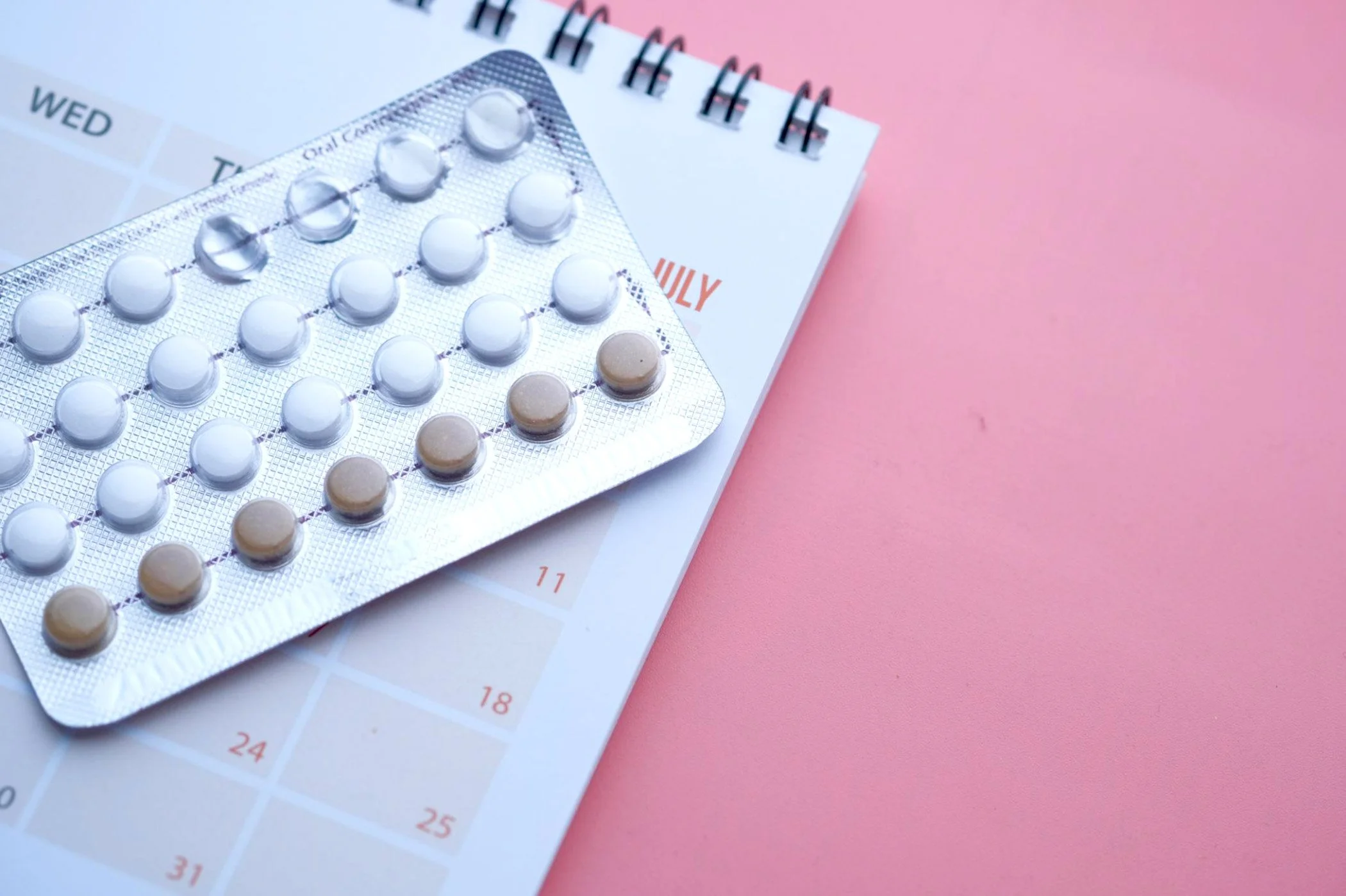
Combined hormonal methods (the pill, patch, ring)
Combined hormonal contraceptives contain both estrogen and progestin. For many healthy, non-smoking women, these can be used safely into the perimenopausal years. A 2025 presentation at The Menopause Society’s annual meeting reaffirmed that healthy women can use combination hormonal contraceptives until their mid-50s, though cardiovascular risk factors may require switching to alternative methods.
These methods can also come with side benefits during perimenopause, including more predictable cycles and, for some women, fewer hot flashes, since they provide noncontraceptive benefits like reduced vasomotor symptoms in addition to pregnancy prevention.
That said, combined hormonal methods aren’t right for everyone. Risk factors like smoking after age 35, migraine with aura, uncontrolled high blood pressure, or a history of blood clots generally rule this category out, which is exactly why this decision benefits from a real conversation with a clinician rather than a one-size-fits-all answer.
Progestin-only methods (mini-pill, implant, hormonal IUD, injection)
For women who aren’t candidates for estrogen-containing methods, progestin-only options are often the next step. These include the progestin-only pill, the arm implant, hormonal IUDs, and the birth control shot. According to the same 2025 clinical update, progestin-only and intrauterine options offer safer alternatives for women with cardiovascular risk factors, including options like continuous norethindrone or newer over-the-counter progestin-only pills.
Hormonal IUDs in particular are frequently discussed for perimenopause because, beyond contraception, they’re associated with lighter periods, which can be a welcome change if perimenopause has made your cycle heavier or less predictable.
Non-hormonal methods
If you’d rather avoid hormones altogether, non-hormonal options, including the copper IUD, condoms, diaphragms, or permanent sterilization, remain valid choices throughout perimenopause. They don’t offer the symptom-related side benefits that hormonal methods sometimes do, but they avoid hormone-related considerations entirely, which matters to a lot of women.
A quick note on timing with menopausal hormone therapy
Some women transition from contraception to menopausal hormone therapy (MHT) once menopause is confirmed, since MHT doses are not designed to prevent pregnancy. This is a separate conversation from contraceptive choice and one worth having with your provider once you’re closer to that stage, rather than something to sort out on your own based on symptoms alone.
Birth Control and Perimenopause Symptoms: Is There Overlap?
This is one of the more interesting parts of the conversation. Certain hormonal contraceptives are sometimes used, under a clinician’s guidance, to help manage symptoms like irregular bleeding or hot flashes during the menopause transition, since steadier hormone levels can smooth out some of the hormonal swings behind those symptoms.
It’s worth being precise here: birth control is not a treatment for menopause, and it isn’t prescribed to prevent any long-term health outcome. Its primary purpose remains pregnancy prevention. Any symptom relief is a secondary consideration that your provider will weigh against your full health history, not a guarantee for any individual. If managing symptoms is your main goal, that’s worth naming directly in your appointment so your provider can walk you through what realistically may or may not help.

How to Think Through Your Own Decision
Every woman’s situation here is different, which is exactly why this isn’t a “pick from a list” decision. A few questions worth bringing to your next appointment:
What’s my personal and family history of blood clots, migraine, or cardiovascular disease?
Do I smoke, or have I in the past 10 years?
Am I noticing symptoms I want help managing, like heavy periods or hot flashes?
How close am I, realistically, to menopause, and how will we track that?
Do I want a method I have to remember daily, or something longer-acting?
Bringing a short list like this to an appointment tends to make the conversation faster and more useful than starting from scratch in the room.

Why This Deserves Real Conversation, Not Guesswork
It’s easy to find yourself Googling symptoms at 11 p.m., trying to piece together whether what you’re feeling is perimenopause, your birth control, stress, or something else entirely. That’s a reasonable response to a confusing stage of life, but it isn’t a substitute for a provider who can actually look at your labs, history, and symptoms together.
This is the kind of care Dr. Jila provides: unhurried, personalized conversations about contraception, symptoms, and the perimenopause transition as a whole, rather than a rushed, one-size-fits-all visit.
Ready for Guidance That Actually Fits Your Body?
At JilaMD, we’re dedicated to helping women navigate perimenopause with personalized, evidence-based care, including contraception counseling that takes your full health picture into account.
FAQs About Birth Control in Perimenopause
-
Yes. Ovulation becomes less predictable during perimenopause, but it doesn’t stop immediately, so pregnancy is still possible until you’ve reached menopause. The annual risk of pregnancy is estimated at around 10% for women ages 40 to 44 and 2 to 3% for women ages 45 to 49 (NIH).
-
Most clinical guidance ties this to your age when your periods stop rather than a set birthday: generally about 24 months after your last period if that happens before age 50, or about 12 months if it happens at age 50 or later. Your provider can help confirm where you stand.
-
For many healthy, non-smoking women without certain risk factors, combined hormonal methods like the pill can be used safely into the mid-50s. Women with cardiovascular risk factors are typically guided toward progestin-only or intrauterine alternatives instead. This is a decision to make with a clinician who knows your health history (AJMC).
-
Some hormonal methods may help smooth out irregular bleeding or reduce hot flashes for some women, as a secondary effect of steadier hormone levels, but birth control is not a treatment for perimenopause and results vary by individual. This is worth discussing directly with your provider.
-
Birth control is formulated primarily to prevent pregnancy and typically contains higher hormone doses. Hormone therapy (sometimes called HRT or MHT) is used after menopause is confirmed, at doses intended for symptom relief, and does not prevent pregnancy. They serve different purposes and aren’t interchangeable.
-
Hormone testing, like FSH levels, is generally considered unreliable while your cycles are still irregular or while you’re using hormonal contraception. Most guidance instead relies on time elapsed since your last period, which is why this conversation is best had with a provider tracking your individual history.
Beyond Birth ControlLearn About Fertility & Perimenopause

Fertility During Menopause

Helping Women Take Control of Their Fertility
Medical disclaimer: This article is for educational purposes only and isn't a substitute for professional medical advice, diagnosis, or treatment. Always consult a qualified healthcare provider about your symptoms.